
Introduction
The way businesses connect with customers has changed dramatically over the past decade. Traditional marketing methods such as newspapers, television, and billboards still have their place, but digital marketing has become the driving force behind business growth in today’s connected world. With billions of people using the internet daily, businesses now have the opportunity to reach their target audience more effectively, measure campaign performance in real time, and build lasting customer relationships.
Whether you are a startup, a small business, or a global enterprise, digital marketing offers endless possibilities to grow your brand and achieve your goals.
What is Digital Marketing?
Digital marketing refers to the promotion of products, services, or brands using online platforms and digital technologies. It includes a wide range of strategies designed to attract, engage, and convert potential customers through the internet.
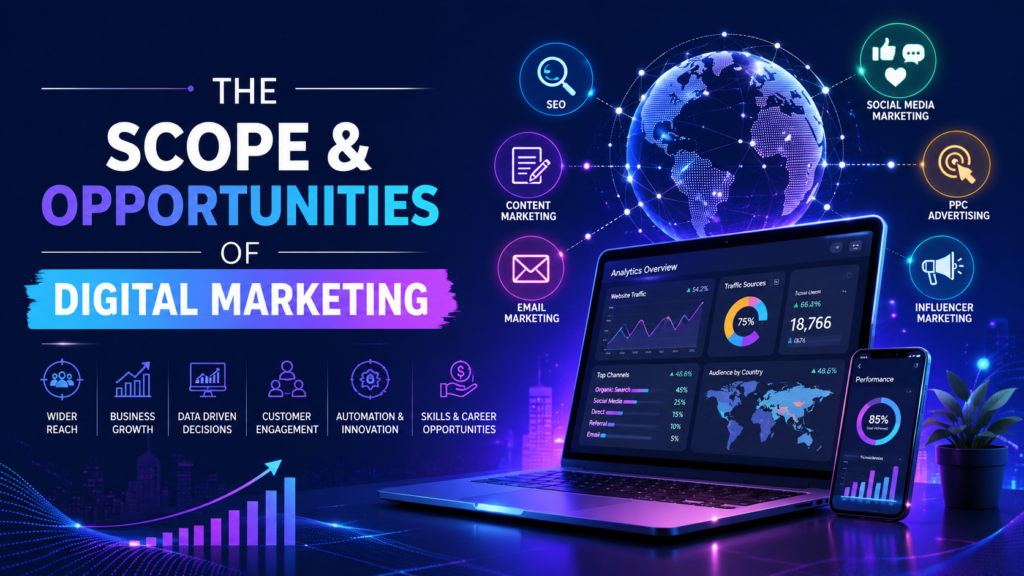
Some of the major components of digital marketing include:
- Search Engine Optimization (SEO)
- Content Marketing
- Social Media Marketing
- Email Marketing
- Pay-Per-Click (PPC) Advertising
- Influencer Marketing
- Affiliate Marketing
- Video Marketing
- Mobile Marketing
Each strategy serves a unique purpose, but together they create a powerful ecosystem that helps businesses build visibility and generate revenue.
The Growing Scope of Digital Marketing
1. Expanding Global Reach
One of the greatest advantages of digital marketing is the ability to reach audiences across geographical boundaries. A business can connect with customers locally, nationally, or internationally without requiring a physical presence in every market.
2. Cost-Effective Business Growth
Compared to traditional advertising, digital marketing provides a more affordable way to promote products and services. Small businesses with limited budgets can compete with larger companies by using targeted campaigns and quality content.
3. Data-Driven Decision Making
Modern digital marketing platforms provide valuable insights into customer behavior, campaign performance, and user engagement. Businesses can analyze this information to optimize their marketing strategies and improve return on investment.
4. Personalized Customer Experiences
Digital marketing enables businesses to deliver personalized messages based on customer interests, browsing history, and purchasing behavior. This creates stronger customer relationships and improves conversion rates.
5. Continuous Innovation
Artificial intelligence, automation, voice search, augmented reality, and predictive analytics continue to transform digital marketing. Businesses that embrace these technologies can stay ahead of competitors and provide better customer experiences.
Career Opportunities in Digital Marketing
As businesses continue shifting online, the demand for skilled digital marketing professionals is growing rapidly. Some of the most sought-after career roles include:
- SEO Specialist
- Digital Marketing Executive
- Content Writer
- Social Media Manager
- PPC Campaign Manager
- Email Marketing Specialist
- Marketing Automation Expert
- Digital Marketing Strategist
- Web Analytics Specialist
- E-commerce Marketing Manager
Freelancing, remote work, consulting, and entrepreneurship have also become popular career paths in the digital marketing industry.
Opportunities for Businesses
Digital marketing is not only beneficial for marketers—it creates significant opportunities for businesses of every size.
Increased Brand Awareness
A strong online presence allows businesses to introduce their brand to new audiences through search engines, social media platforms, and valuable content.
Higher Customer Engagement
Businesses can communicate directly with customers through comments, live chats, social media interactions, and email campaigns, creating stronger relationships and increased trust.
Better Lead Generation
Well-planned digital marketing campaigns attract qualified leads who are genuinely interested in a company’s products or services, resulting in higher conversion rates.
Measurable Results
Unlike many traditional marketing methods, digital marketing allows businesses to track impressions, clicks, conversions, sales, and customer engagement in real time. This transparency helps organizations make informed decisions and maximize marketing performance.
Business Scalability
Digital marketing strategies can easily be adjusted as a business grows. Companies can expand campaigns, target new markets, and launch additional products without significantly increasing marketing costs.
Why Digital Marketing Matters for the Future
The future of business is increasingly digital. Consumers rely on online searches, reviews, social media, and digital content before making purchasing decisions. Companies that invest in digital marketing position themselves to remain competitive in an evolving marketplace.
Emerging technologies such as artificial intelligence, machine learning, automation, and advanced analytics will continue to reshape how businesses connect with customers. Organizations that adapt to these changes will be better equipped to build sustainable growth.
Tips for Success in Digital Marketing
Businesses looking to maximize the benefits of digital marketing should focus on:
- Understanding their target audience.
- Creating valuable and relevant content.
- Optimizing websites for search engines.
- Maintaining an active social media presence.
- Using data analytics to improve campaigns.
- Adapting quickly to changing digital trends.
- Delivering consistent customer experiences across all digital channels.
Conclusion
Digital marketing has become an essential part of modern business strategy. Its ability to reach global audiences, deliver measurable results, and create meaningful customer relationships makes it one of the most valuable investments for organizations today.
As technology continues to evolve, the scope of digital marketing will expand even further, creating exciting opportunities for businesses, entrepreneurs, and professionals alike. Companies that embrace digital transformation, focus on customer value, and continuously adapt to new trends will be well-positioned for long-term success in the digital age.